Most people don’t fail because they “don’t want it enough”. They fail because they’re trying to use behaviour change on strictly motivation, then feeling shocked when motivation disappears.
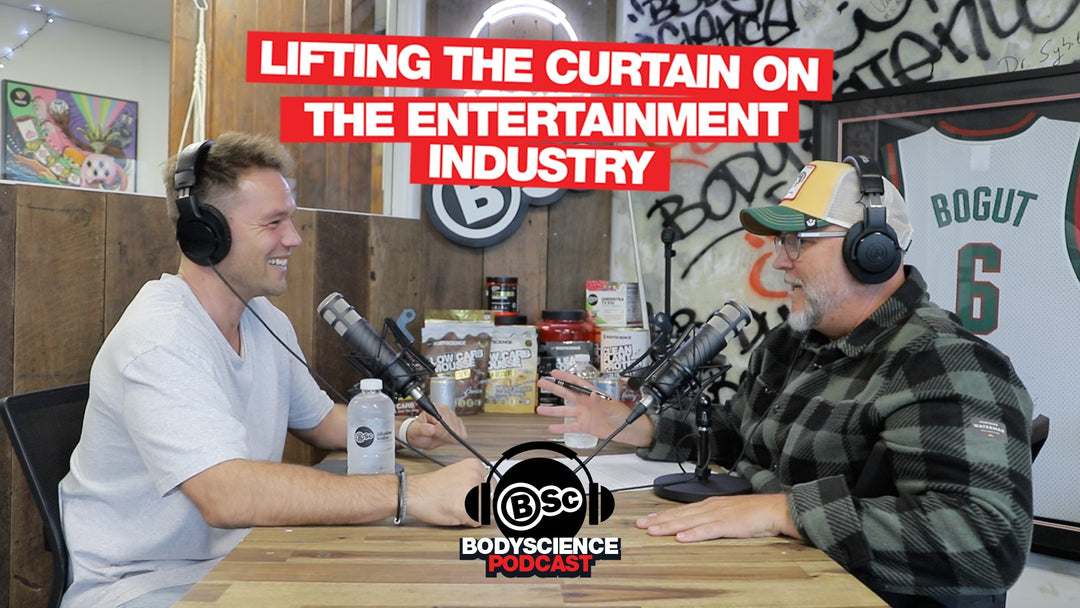
In the Luke Mathers (Curious Habits) podcast episode, the core idea is simple and practical, behaviour change runs on cues and repetition, not willpower. Your brain leans on what’s familiar when life gets busy, stressful, or tiring. That’s not a character flaw. It’s a normal human pattern.
Behaviour change isn’t about trying harder. It’s about building cues and repetition that hold up under stress, fatigue and time pressure. This article breaks down why you default to familiar patterns, why insight alone rarely sticks, and how to use identity and simple environment design to build habits you can repeat.
Prefer to listen instead? Here’s the full episode: Curious Habits - Around Food & Exercise with Luke Mathers
Your brain defaults to the familiar
When you’re under load, your brain looks for the fastest path to safety and relief. That usually means the most rehearsed behaviour, the thing you’ve done before, the shortcut, the pattern that reduces friction right now.
That’s why you can “know what to do” and still not do it consistently. Knowledge is not the same as a reliable behaviour.
Repetition builds the pathway
A key neuroscience principal Luke reinforces is that repeated actions strengthen the pathway. You don’t need to memorise scientific terms to feel the effect. If you repeat something enough, it becomes easier to do without thinking. If you don’t, your old defaults keep winning.
Insight can help you notice the pattern. Repetition is what changes the pattern.
Cues decide what happens next
A cue is a trigger that nudges you into a behaviour. It can be:
- A time (after lunch, late night)
- A place (car, desk, kitchen)
- A feeling (stress, boredom, tiredness)
- A situation (after a hard meeting, after a long day)
When cues are vague, behaviour becomes guesswork. When cues are clear, behaviour becomes automatic.
Identity shapes what you repeat
Outcome goals are things like “lose weight” or “get fitter”. Identity goals are “I’m someone who follows through” or “I’m someone who trains even when work is messy”.
Luke’s question is useful because it’s specific: “Who am I practising being under pressure?”
Because when life gets stressful, you don’t magically rise to your goals. You fall back to the person you’ve been rehearsing through your repeated actions.
When it matters most
The hard part of behaviour change doesn’t show up when life is smooth. It shows up when you’re under load, because that’s when your brain defaults to familiar patterns.
This is the real-world test:
- Stress: you reach for short-term relief (avoidance, scrolling, snacking, skipping the hard conversation)
- Fatigue: decision-making drops and you choose the easiest next step
- Time pressure: you go with whatever is already set up
If your plan only works on your best days, it’s not a plan. It’s a mood.
What to expect
Don’t expect one insight to change your week.
Because your brain defaults to what’s familiar. You can understand the pattern today and still repeat it tomorrow if the cues and environment stay the same. Behaviour change is rarely one big moment. It's usually small reps done often, especially on the ordinary days.
What to do this week
Step 1: Name your default
Pick one pattern you fall into under pressure. Keep it specific.
Examples:
- “When I’m stressed at night, I snack while I scroll.”
- “When I’m tired after work, I skip training.”
- “When there’s tension, I avoid the conversation.”
Step 2: Find the cue
Ask: what reliably happens right before it?
- Time (9pm)
- Place (on the couch)
- Feeling (overwhelmed)
- Situation (after a long day)
You’re not trying to judge it. You’re trying to spot it.
Step 3: Choose an identity line
Pick 2–3 traits that matter to you under pressure.
Examples:
- “I’m steady.”
- “I follow through.”
- “I’m direct, not avoidant.”
This isn’t positive thinking. It’s a decision about what you’re practising.
Step 4: Build a “first move”
Don’t design the whole routine. Design the first move that happens fast.
A useful rule:
If your day goes sideways, keep one cue visible and make it the first move.
Example:
- Cue = shaker + scoop + oats on the bench before bed
- First move = make it while the kettle boils
The point isn’t the specific items. The point is reducing friction and removing guesswork when you’re tired.
Step 5: Make the environment do the work
Your environment is either helping your identity or helping your old default.
Small changes that work because they’re practical:
- Put the cue where the behaviour happens (bench, desk, car)
- Remove one barrier (pack the bag, fill the bottle, set the calendar)
- Make the “first move” easier than the old pattern
That’s where BSc Whey Protein works as a practical cue, as it’s designed to be reliable, easy to digest, and easy to stick to every day.
- a simple post-training or between-meals protein hit, without overthinking food prep.
Turn it into a habit (steal this cue)
Cue: shaker + tub on the bench before bed.
First move: mix it while the kettle boils (or as soon as you walk in the door).
The point isn’t the perfect macro plan. It’s making the “next right step” the easiest option when you’re tired.
Common misconceptions
“If I understand it, I’ll do it”
Understanding helps, but it’s not the same as action. The gap is usually cue design and repetition, not intelligence.
“I just need more discipline”
Discipline matters, but discipline is easier when the environment is built for follow-through. A good cue turns “I should” into “I do”.
“If I slip, I’m back to zero”
Slips are data. They show you where your cues are weak and where your environment is pulling you back to the familiar.